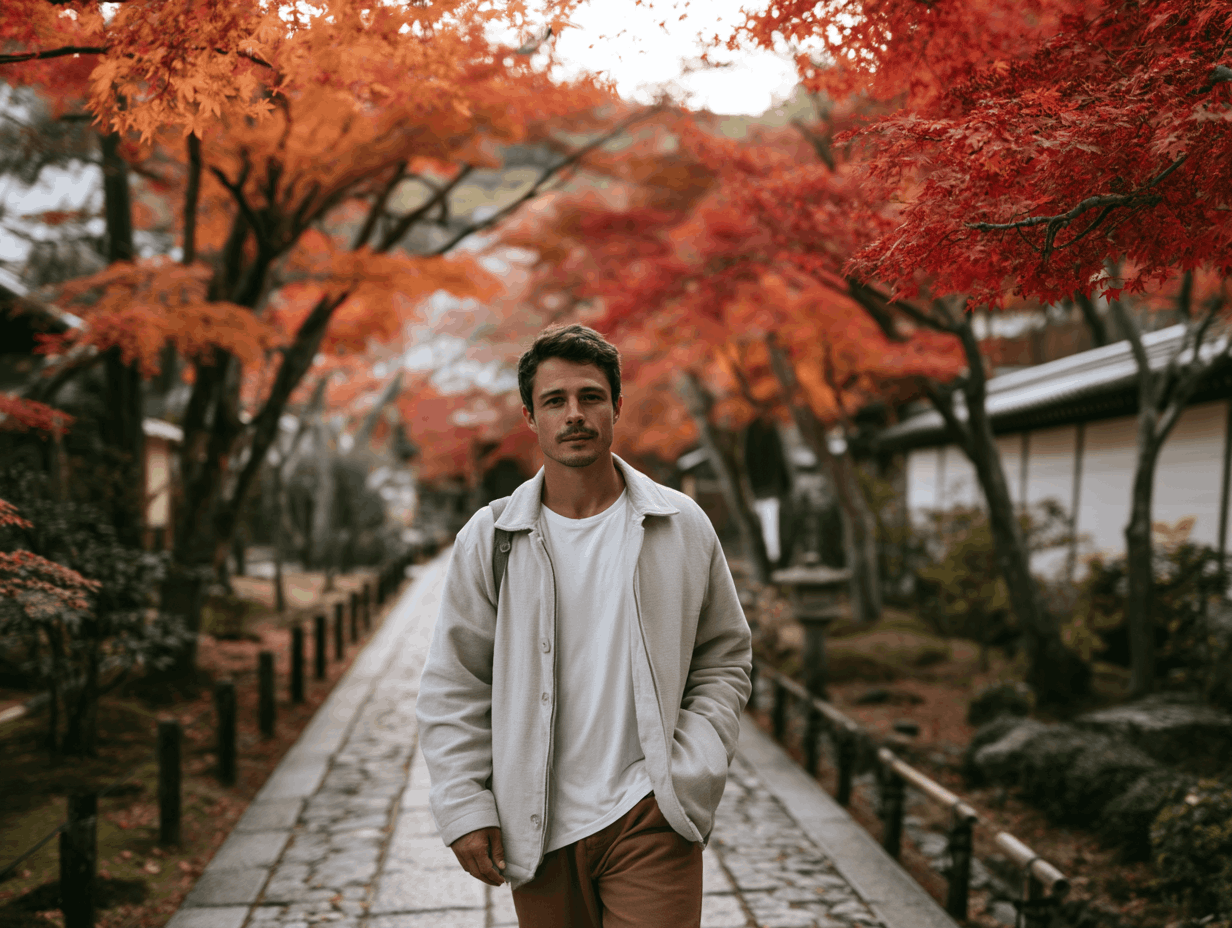
Kyoto earns a 9.1 on the Rory Trotter Test for me. A full week lets the city breathe instead of forcing it into a checklist. Temples, gardens, quiet streets and food that does not rush you. This is the pace I would choose again.
Day one stays close to the centre. Morning in a smaller temple garden before the paths fill. The gravel and the trees set the tone. Lunch at a simple counter with rice and whatever is fresh. Afternoon walking the narrower streets where laundry hangs and bikes lean against walls. Evening by the river when the light softens.
Day two moves a little further. Early start at a hillside temple where the steps wake you up properly. Take the longer path down through the trees. Midday meal in a place with few tables and no hurry. The rest of the day is for slow walking between smaller shrines and quiet residential corners.
Day three is for gardens. One larger one in the morning while the air is still cool, then a second smaller one later when most people have moved on. Bring water and sit longer than you planned. Food stays simple. Grilled fish or a bowl of noodles is enough.
Day four leaves the main temple routes. Explore a neighbourhood that feels ordinary. Local shops, a market if it is open, and streets that do not appear on most maps. The day is deliberately light. Sit when you find a bench that faces something green.
Day five returns to temples but chooses the ones that open early and sit a bit off the main lines. Walk between them instead of taking short transport hops. The distances are manageable and the in-between parts are often the best. Evening meal somewhere quiet with a short menu.
Day six is river and open space. Follow the water for a longer stretch, stop at any small shrine that appears, and let the day stay loose. Pack a simple lunch if you want to avoid searching later. The pace should feel almost too slow by now. That is the point.
Day seven circles back to a favourite corner from earlier in the week. No new big sights. Just the same paths at a different hour, a final garden, and a meal that does not need explanation. Leave room to do almost nothing.
City Experience 9.5/10
The balance of temples and everyday streets still feels unmatched when you give it time.
Food 9/10
Quiet counters and small places carry more weight than any busy strip. The food tastes better when you are not watching the clock.
Value 8/10
Reasonable if you stay outside the densest temple zones. Meals and transport stay kind to the budget.
Walkability 9/10
Most days work entirely on foot once you accept the gentle hills. The city rewards the slower steps.
Family Friendly 8/10
Gardens and open paths help. Younger kids may need more breaks between temple visits, but the calm setting works in their favour.
Tourist Traps 6/10
Certain temple approaches get lined with the same shops. Arrive early or use the side paths and the pressure drops.
Rory’s Verdict
GO. A week in Kyoto is worth it when you stop treating the temples like a race. The gardens, the food and the quiet streets do the real work. I would repeat this pace without changing much.
Rory’s Tips
Start every temple visit as early as the gates allow. The difference in crowd and light is clear.
Eat where the menu is limited and the tables are few. The quality usually rises.
Walk the longer routes between places instead of jumping short distances. The in-between is often better.
Carry a light rain jacket. The weather can shift and the gardens still look good wet.
Leave at least one full afternoon with no plan at all. Kyoto works best when you stop filling every hour.
Leave your email and I will send new scores, updated tips and the occasional side note from the road. No daily noise, just the pieces worth reading.
© 2026 Rory Trotter LLC. All rights reserved.
